
Workshop of Impulse
Part 1. Immune System
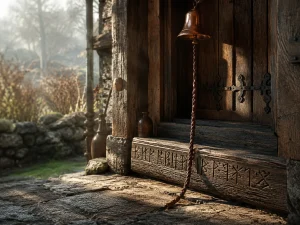
Threshold of a Living House
In essence, the immune system shows that the body already recognizes the world.
It does this without words.
It holds the threshold, hears danger, removes excess and seeks recovery.
Therefore, the body can be seen not as a rough shell.
It can be seen as a smart living system.
The immune system is not simply protection from microbes.
It resembles a service of recognition.
The body constantly clarifies what is its own, foreign or dangerous.
Besides, it distinguishes damaged things from what must not be touched.
At the same time, this is not treatment instead of a doctor.
It is about the principle of living tuning.
The body does not ask a person with words.
However, it sends signals all the time.
Sometimes this is fatigue.
Sometimes it is tension.
At times, pain, heat, cold or a wish for silence appears.
In essence, a person often hears such signals as interference.
But the body is not reporting a whim.
It shows the state of the system.
This is how the immune system works too.
In other words, it begins not with war, but with a threshold.
The body has skin, mucous membranes, tears, mucus, cough and sneezing.
Still, this is not simply mechanical protection.
It is the first question of the house:
“Who are you, and why are you knocking?”
If the threshold is clean, Life inside builds itself more calmly.
If the boundaries are full of holes, energy goes into endless anxiety.
Therefore, safety does not begin with fear.
It begins with respect for the living house.
Fast Guard
When the signal is already inside
Meanwhile, if a foreign trace still passes inside, the fast guard turns on.
In essence, this part of immunity works quickly.
It does not always know the name of the intruder.
However, it recognizes typical signs of danger.
One can say it more simply.
A foreign trace has appeared in the house.
So the doors must be closed, help called and cleaning started.
This is how inflammation appears.
Inflammation is not always an enemy.
Sometimes it gathers strength in the needed place.
As a result, blood, cells and protective substances go there.
Repair forces also move to the place of trouble.
However, measure decides everything here.
Still, a weak response may fail to hold the danger.
Too strong a response can exhaust the house.
As a result, protection itself becomes a source of noise.
Therefore, a healthy impulse should not become an eternal siren.
Impulse is needed to begin action.
But Workshop of Impulse teaches more than launch.
It teaches direction, strength and timely completion.
Cleaning After Alarm
Immunity does not only fight
At the same time, the immune system does not only protect the body.
It also removes inner waste.
Dead cells, traces of damage and remains of struggle require attention.
Besides, the body needs space for recovery.
If cleaning does not happen, the house grows over with consequences.
Anxiety does not turn off, and it becomes cramped inside.
In fact, this is a very human theme.
A person also often knows how to switch on.
But they do not always know how to finish.
They may hold tension long after danger has passed.
They may drag old anxiety into a new day.
Exactly here the body becomes a teacher.
In essence, it shows a simple rule.
It is not enough to raise protection.
One also needs to remove the traces.
Then it is important to return space to life.
So the immune system reminds us of the Workshop of Impulse rule.
Strength without completion turns into overload.
Movement without cleaning leaves waste.
Care without measure can become pressure.
Part 2. Smart Memory
When the Body Draws Conclusions
If the encounter is serious, a more precise system turns on.
It works more slowly during the first encounter.
However, later it recognizes the intruder faster.
Cells that learn to distinguish a specific trace take part in this.
This is how memory appears.
In other words, the immune system does not simply fight.
It draws conclusions.
The first time resembles reconnaissance.
The second time can already become recognition.
This is very similar to human experience.
At first, a person does not understand what happened.
Later, they notice repetition.
In the end, they begin to distinguish a familiar signal.
The body also learns through encounters.
However, memory requires purity.
If the system confuses its own with foreign, an error appears.
Then protection may turn in the wrong direction.
Therefore, rough strength is not the main thing.
Clarity of recognition matters more.
A strong immune system is too simple a dream.
Besides, smart immunity is more precise.
It needs tuning, measure and the ability to stop.
The Body as a Smart System
Navigator instead of a rough driver
Today, a person easily trusts smart machines.
They look at a navigator.
Sensors are taken into account.
They listen to brake signals.
If a warning light turns on, they do not scold the dashboard.
However, with the body, a person often acts differently.
The body reports fatigue.
A person says: “Laziness.”
The body asks for water.
The mind answers: “Later.”
Tension appears in the body.
A person decides to endure.
But the body is not an enemy or a servant.
It is more like a smart living machine.
Only its language is different.
It speaks through breathing, taste, sleep, pulse, warmth and heaviness.
Also, it speaks through ease, pain, aversion and desire for movement.
On the other hand, one can learn this language.
In any case, a person need not be a rough driver.
It is better to become the navigator of a living system.
A navigator does not remove responsibility.
However, they do not argue with instruments out of pride.
They check the course.
The state is observed.
They consider the weather.
Besides, they trust signals, but check the decision.
This is how mature management appears.
Do not blindly fulfill every impulse.
Do not suppress the body by command.
Hear the signal, check the circumstances and choose movement.
Safety First
A fence is not a prison
Meanwhile, a house for Life begins with a threshold.
First, a person marks the territory.
Then they decide whom to let in.
After that, they build the house and fill it with warmth.
But the fence must not become a prison.
It is not needed for escape from Life.
It is needed so Life can build itself calmly inside.
In other words, the body works this way too.
Skin, mucous membranes, breathing, sleep and recovery help hold the boundary.
Besides, habits also become part of the threshold.
If a person constantly violates bodily boundaries, the system gets tired.
If they stop moving completely, Life loses its course.
Therefore, what is needed is not an extreme, but alignment.
The Workshop of Impulse looks exactly there.
Impulse should pass through the threshold.
Not everything one wants should be done at once.
But not everything frightening should be forbidden forever.
True tuning begins with a question:
“What helps Life move now?”
Part 3. Place Comes First
Conditions for Living Movement
In essence, place comes first.
Then come conditions.
After that, Life itself seeks form.
This is visible in nature.
Water finds a course, a sprout seeks light, and the body seeks balance.
Fatigue sometimes asks not for stopping, but for another movement form.
If conditions change, Life does not always disappear.
At times, it changes its way of manifestation.
In essence, the body teaches not to break the form.
It needs place.
It needs air, water, rest, movement and warmth.
Besides, it needs inner safety.
Then impulse becomes not a flash, but a directed current.
Still, one can lightly touch a large future theme here.
There is invisible connectedness in the body.
For example, connective tissue resembles a quiet network.
Through it, the body seems to remember itself as a whole.
However, fascia is a separate large door.
For now, something else matters.
There are no accidental separate details in the body.
Everything is connected with the general state.
Therefore, movement of one part changes the whole house.
Journey of Meanings
Three Doors of Tuning
In the end, this page opens three doors in the Journey of Meanings.
The first door is “Hold the threshold.”
It asks what a person lets inside.
It also shows where a boundary is needed.
This is the path of safety, skin, home and self-respect.
The second door is “Recognize the signal.”
Here a person learns to hear the body.
Not as interference, but as the language of a system.
If the signal is clear, the decision becomes more precise.
The third door is “Turn off the siren.”
This path leads to measure.
Because anxiety is not needed forever.
Protection should begin on time and end on time.
In essence, all three doors are right.
One leads to the threshold.
Another leads to the body’s language.
The third leads to mature completion of action.
One way or another, the immune system becomes more than a body theme.
It becomes an image of reasonable impulse.
The immune system holds the threshold of the living house.
It recognizes the foreign.
Damage is removed.
It remembers danger.
Besides, it must stop on time.
This is its main wisdom.
A living body does not require rough management.
It asks for attention, trust and tuning.
A person remains responsible.
But they can be not a whip, but a navigator.
The Workshop of Impulse does not begin with force.
It begins with alignment.
Give Life a place.
Create conditions for it.
Give it a clean threshold.
And Life will find the form itself.
Udanna Light and Awareness, sparks of meaning nearby.